Markets Muted on Presidents Day as Pentagon-Anthropic Standoff Rattles Tech Investors
U.S. and Chinese markets closed simultaneously for Presidents Day and Lunar New Year, keeping global activity subdued, while the Pentagon threatened to blacklist AI firm Anthropic as a supply chain risk — pressuring Amazon and broader tech sentiment heading into a pivotal earnings week.
Global Markets Subdued as US and China Observe Simultaneous Holidays, S&P 500 Futures End Flat
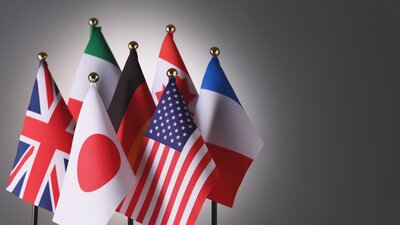
Monday, February 16, 2026 marked one of the quietest trading sessions in recent memory as two of the world world largest economies simultaneously shuttered their exchanges. U.S. markets remained closed for Presidents Day — honoring George Washington — while Chinese markets closed for the entire week in observance of the Lunar New Year, a combination that dramatically reduced global liquidity across equities, commodities, and currencies.
S&P 500 futures initially moved higher during the session but relinquished those gains, finishing essentially flat by the North American close. European equity markets, which remained open, showed only marginal movement: Germany DAX gained 0.26% and France CAC40 added 0.24%. Gold retreated $51 to $4,990 per ounce, unwinding some of its seasonal tailwind that typically runs November through February. The Australian dollar was the session top-performing major currency while the Japanese yen lagged behind.
With both the world largest and second-largest economies on holiday, analysts flagged Tuesday as the session that would carry far greater significance. The coming week is packed with high-impact events: German and Canadian CPI releases, UK employment data, Japan trade balance figures, a Reserve Bank of New Zealand policy decision under incoming Governor Anna Breman, and Walmart Q4 FY2026 earnings on February 19.
Nikkei 225 Falls 1.5% After 17-Minute PM-BOJ Meeting Seen as Ruling Out Near-Term Policy Coordination
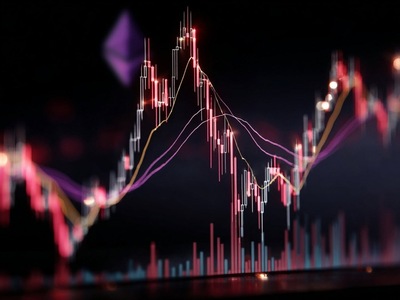
Japan benchmark Nikkei 225 index fell 1.5% on Monday following a brief and closely-watched meeting between Prime Minister Sanae Takaichi and Bank of Japan Governor Kazuo Ueda — the first bilateral meeting since Takaichi ruling party secured a landslide election victory. The encounter lasted just 17 minutes, after which Ueda told reporters the two had exchanged general views on economic and financial developments, and that the prime minister made no specific monetary policy requests.
Market participants interpreted the short, low-key encounter as a signal that meaningful fiscal-monetary coordination remained unlikely in the near term. The Japanese yen weakened in the immediate aftermath, making it the session weakest major currency. Despite the muted meeting outcome, futures markets remain firmly positioned for further BOJ tightening, with traders pricing roughly an 80% probability of another interest rate hike by April 2026.
The Nikkei pullback followed a historic rally that carried the index to new heights coming into 2026. Analysts have pointed to stretched valuations and ongoing uncertainty over the pace of BOJ policy normalization as contributing factors to recent outflows from Japanese equities.
Pentagon Threatens to Blacklist Anthropic as Supply Chain Risk in Dispute Over AI Military Guardrails
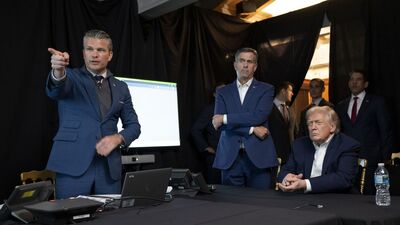
Defense Secretary Pete Hegseth is reportedly close to cutting all business ties with Anthropic and designating the AI company a supply chain risk — a designation ordinarily reserved for foreign adversaries — according to a senior Pentagon official who spoke to Axios. The standoff centers on Anthropic insistence on contractual guardrails preventing its Claude AI from being used for mass surveillance of U.S. citizens or in weapons systems that can engage targets without a human in the decision loop. The Pentagon position is that it must be able to use the technology for any lawful purpose without such restrictions.
The commercial stakes are significant. Claude is currently the only large language model deployed in the U.S. military classified systems, and the contract under negotiation is valued at up to $200 million. A supply chain risk designation would require any company doing business with the Defense Department to sever ties with Anthropic — a sweeping liability given that eight of the ten largest U.S. companies currently use Claude. Amazon, a major investor in Anthropic through its AWS cloud division, saw its stock come under pressure as the report circulated on Monday.
The dispute is reshaping competitive dynamics across the AI sector. According to sources cited in multiple reports, the Pentagon is simultaneously negotiating with OpenAI, Google, and Elon Musk xAI — all of which have already agreed to remove safety guardrails for use in unclassified military systems — and expects them to accept the same all-lawful-use standard being demanded of Anthropic.
WTI Crude Climbs Toward $64 as Traders Await Second Round of US-Iran Nuclear Talks in Geneva
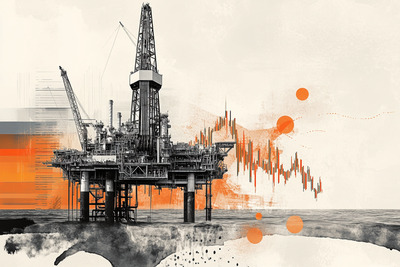
West Texas Intermediate crude oil rose approximately 84 cents on Monday, trading near $63.73 per barrel, as geopolitical risk premium remained intact ahead of a second round of indirect nuclear negotiations between the United States and Iran, scheduled for Geneva. Crude had dipped to a nearly two-week low on Friday after soft U.S. consumer inflation data — CPI at 2.4% — lifted expectations for a Federal Reserve rate cut in June, a development that itself offered some support to dollar-denominated commodities.
The diplomatic backdrop remains uncertain. While President Trump indicated last week that a deal with Iran was achievable within a month and Iranian officials expressed readiness for compromise, the U.S. separately dispatched a second aircraft carrier to the Middle East as a contingency should talks collapse. Iran Revolutionary Guards warned of retaliation against U.S. military installations in the event of strikes, a threat traders cited as maintaining a floor under crude prices.
Elsewhere in commodities, gold fell $51 to $4,990 per ounce as the post-Lunar New Year period historically marks the end of a seasonal tailwind for bullion that typically runs November through February. Currency markets saw the Australian dollar outperform amid broader commodity correlations, while the U.S. dollar posted modest gains on thin holiday trading volume.
What You Can Do
Track This Week Major Earnings
Walmart reports Q4 FY2026 on February 19 and Nvidia follows on February 25 — two closely-watched bellwethers for consumer spending and AI infrastructure demand.
Follow the US-Iran Nuclear Talks
The second round of indirect negotiations in Geneva begins Tuesday and could significantly move oil prices in either direction.
Read the Full Pentagon-Anthropic Standoff Report
Axios exclusive on the Hegseth ultimatum explains the dispute terms, the supply chain risk designation, and what it means for AI company military contracts.
This content is for informational purposes only and does not constitute financial advice. Consult a qualified financial advisor before making investment decisions.