Markets Rally Then Retreat as Supreme Court Kills Trump Tariffs — President Immediately Signs New 10% Global Duties
U.S. stocks seesawed Friday after the Supreme Court struck down Trump's sweeping tariffs 6-3, sparking a relief rally, before the president signed a new 10% global tariff order — all against a backdrop of Q4 GDP missing estimates at 1.4% and core inflation climbing to 3%.
Supreme Court Strikes Down Trump Tariffs 6-3, Triggering Broad Market Relief Rally
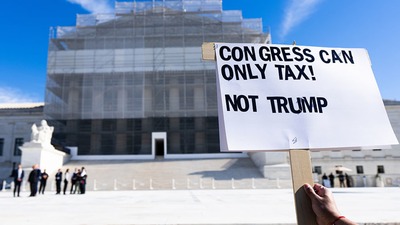
The U.S. Supreme Court dealt a major blow to President Trump's trade agenda on Friday, ruling 6-3 that his sweeping reciprocal tariffs were unlawful under the International Emergency Economic Powers Act (IEEPA). The majority held that the 1977 statute does not grant the president the authority to unilaterally impose broad import duties as an emergency measure, marking one of the most significant judicial checks on executive trade power in modern history.
Financial markets responded with an immediate relief rally. The S&P 500 climbed 0.69% to close at 6,909.51, the Nasdaq Composite rose 0.90% to 22,886.07, and the Dow Jones Industrial Average added 230.81 points — or 0.47% — to end the session at 49,625.97. Companies whose costs had been most directly inflated by the duties surged: e-commerce platforms Wayfair, Amazon, eBay, and Etsy were among the day's top performers, along with appliance manufacturers and other import-heavy industries.
The ruling represented a historic rebuke of a signature piece of the Trump administration's economic agenda, immediately raising questions about the future legal framework for U.S. trade policy heading into 2026.
Q4 GDP Comes In at Just 1.4%, Far Below Forecasts, as Core PCE Inflation Rises to 3%
The U.S. Bureau of Economic Analysis released its advance estimate of fourth-quarter 2025 GDP on Friday, showing annualized growth of just 1.4% — well below Wall Street's consensus estimate of 2.5% and a sharp deceleration from the prior quarter's 4.4% pace. Analysts attributed a meaningful portion of the shortfall to the federal government shutdown, which ran through the first half of the quarter and was estimated to have subtracted approximately one percentage point from growth on its own.
Compounding investor concerns, the Federal Reserve's preferred inflation gauge — core Personal Consumption Expenditures (PCE), which excludes food and energy — accelerated to 3.0% year-over-year in December, up from 2.8% in the prior reading and above the 2.9% consensus expectation. Headline PCE also came in slightly warmer than forecast at 2.9%. The confluence of significantly slower growth and rising price pressures stoked concerns among some economists about a potential stagflationary environment in the early part of 2026.
Despite the weak data, equities ultimately closed higher on the day as the Supreme Court's tariff ruling overshadowed the macro headwinds. The report nonetheless underscores the difficult policy path facing Federal Reserve officials, who must balance stubborn inflation against the risk of a more pronounced economic slowdown.
Trump Signs New 10% Global Tariff Order Hours After Supreme Court Rebuke
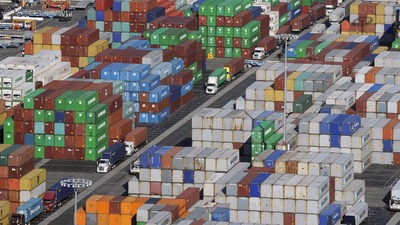
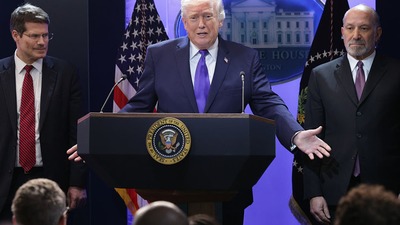
In a swift counterpunch to the Supreme Court's ruling, President Trump signed an executive order Friday imposing a 10% tariff on imports from virtually all countries, invoking Section 122 of the Trade Act of 1974 — a separate legal authority from the IEEPA statutes the court had just invalidated. The new duties are set to take effect at 12:01 a.m. on February 24, and under Section 122 they carry a statutory maximum duration of 150 days.
The order included several carve-outs: certain food imports, critical minerals, consumer electronics, automobiles, and goods from Canada and Mexico covered under the U.S.-Mexico-Canada Agreement (USMCA) were exempted from the new duties. The announcement sent markets into a volatile session, partly offsetting the earlier tariff-relief rally as investors weighed the legal durability of the new order and its near-term impact on supply chains and corporate margins.
On Saturday, Trump escalated further, announcing he was raising the global tariff rate to 15%, citing the maximum level legally permitted under Section 122. The rapid escalation renewed uncertainty across trade-sensitive sectors and set the stage for what analysts widely expect will be a prolonged legal and political battle over the scope of presidential tariff authority heading into spring 2026.
What You Can Do
Read the Full Supreme Court Tariff Decision Analysis
CNBC's five key takeaways from the landmark 6-3 ruling that struck down Trump's sweeping IEEPA-based import duties.
View Official GDP and PCE Data from the BEA
Access the Bureau of Economic Analysis's official Q4 2025 GDP advance estimate and Personal Consumption Expenditures price index.
Follow the Tariff Ruling Live Coverage
Yahoo Finance's live blog tracking the Supreme Court ruling, Trump's executive response, and the subsequent escalation to a 15% global tariff rate.
This content is for informational purposes only and does not constitute financial advice. Consult a qualified financial advisor before making investment decisions.