Iran Security Chief Killed as Trump Feuds with NATO Over Hormuz Mission
Israel assassinated Iran's top security official Ali Larijani on March 17 while Trump publicly clashed with European allies for refusing the Strait of Hormuz mission; Illinois held primary elections and a judge blocked RFK Jr.'s vaccine overhaul.
Israel Kills Iran Security Chief Larijani and Basij Commander in Targeted Strikes
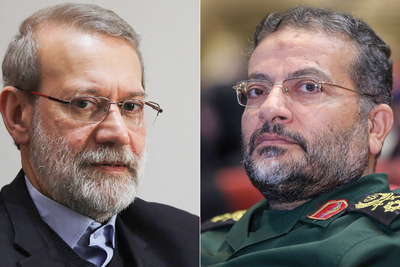
Israeli forces killed Ali Larijani, Iran's top security official, in targeted airstrikes on March 17, along with Basij force commander Gholamreza Soleimani. Iran's Supreme National Security Council confirmed the deaths, stating that Larijani, his son Morteza, the head of his office, and several guards were all killed. Israeli Defense Minister Israel Katz announced both killings publicly, marking one of the most significant leadership losses for Tehran since the conflict began on February 28.
Larijani was among the most influential figures in the Islamic Republic for decades, having previously led Iran's nuclear negotiations with Western powers and served as speaker of the Iranian parliament. His death is the highest-profile assassination since the killing of Supreme Leader Ayatollah Ali Khamenei at the conflict's outset. In response, Iran's Islamic Revolutionary Guard Corps stated its missiles struck more than 100 military and security targets in Israeli territory as retaliation.
The strikes further intensified an already volatile conflict. The UAE shut down its airspace due to missile and drone threats, Saudi Arabia's Defense Ministry reported intercepting a dozen drones, and a fire broke out in an industrial area in Qatar after a missile was intercepted. Oil prices remained above $100 per barrel amid continued closure of the Strait of Hormuz, which carries approximately 20% of the world's oil supply.
Trump Publicly Slams NATO Allies for Refusing to Join Iran War Effort
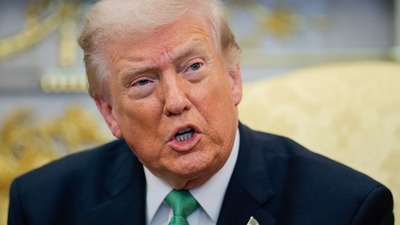
President Donald Trump sharply criticized NATO allies on March 17 for declining to join his administration's Strait of Hormuz security mission, calling their refusal "a very foolish mistake." Germany, Japan, Italy, and Australia all stated they would not participate. British Prime Minister Keir Starmer said the U.K. would "not be drawn into the wider war," while French President Emmanuel Macron indicated France was willing to help secure the strait only as part of a separate mission, stating "We are not a party to the conflict."
Trump responded on Truth Social that "The United States has been informed by most of our Nato 'Allies' that they don't want to get involved with our Military Operation against the terrorist regime of Iran," adding that the U.S. "no longer 'need,' or desire, the Nato Countries' assistance — WE NEVER DID!" Trump also indicated he may delay a planned trip to China, and reached out to Beijing to help reopen the Strait of Hormuz.
Iran has effectively closed the critical waterway since attacks on vessels the previous week, sending oil prices above $100 per barrel. The International Energy Agency released 400 million barrels from emergency reserves as a stopgap measure. Analysts warned that a prolonged closure could trigger recession in major oil-importing economies.
National Counterterrorism Center Director Resigns in Protest Over Iran War
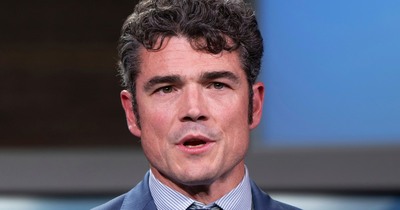
Joe Kent, director of the U.S. National Counterterrorism Center, resigned on March 17, stating in a public letter posted on X that he could not "in good conscience" continue serving given the ongoing war with Iran. Kent, a former U.S. Army Ranger and Special Forces veteran with 11 combat deployments in the Middle East, wrote that "Iran posed no imminent threat to our nation, and it is clear that we started this war due to pressure from Israel and its powerful American lobby."
Kent's resignation reflects growing dissent within Trump's broader political coalition. He had been appointed by Director of National Intelligence Tulsi Gabbard and was considered an ally within the MAGA movement. His departure drew criticism from some prominent MAGA figures who have opposed the administration's decision to enter a conflict they view as contrary to Trump's campaign pledges to end long-term U.S. military engagements.
President Trump dismissed Kent's resignation, telling reporters, "I always thought he was weak on security" and "I didn't know him well." Trump maintained that Iran did pose a threat, calling Kent's departure "a good thing." The resignation stands as the most prominent inside-the-administration protest against the war since it began in late February.
Federal Judge Blocks RFK Jr.'s Overhaul of Childhood Vaccine Schedule
A federal judge in Massachusetts blocked Health Secretary Robert F. Kennedy Jr.'s overhaul of the U.S. childhood vaccine schedule, ruling that Kennedy and his advisers had acted arbitrarily and in violation of established scientific processes. U.S. District Judge Brian Murphy sided with the American Academy of Pediatrics and other medical organizations that filed suit against the Department of Health and Human Services.
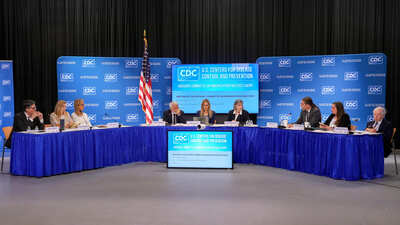
The ruling targets changes Kennedy implemented in January, when the CDC reduced the number of recommended childhood vaccinations from 18 to 11, dropping recommendations for hepatitis A, hepatitis B, RSV, dengue, and two types of bacterial meningitis. Judge Murphy also blocked Kennedy's 13 appointments to the CDC's vaccine advisory committee (ACIP) from continuing in their roles, effectively invalidating their prior votes to reshape vaccine policy.
An HHS spokesperson confirmed that a scheduled ACIP meeting was postponed following the ruling. Kennedy had framed his changes as restoring parental choice and scientific independence, while plaintiffs argued the changes bypassed legally required processes and endangered public health. An appeal from the administration is expected.
Illinois Primary Sets Up Pritzker-Bailey Gubernatorial Rematch for November
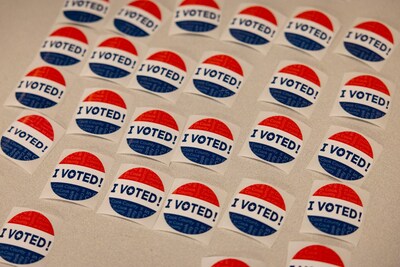
Illinois held its 2026 primary elections on March 17, with Darren Bailey winning the Republican gubernatorial nomination and setting up a rematch against incumbent Democratic Governor JB Pritzker. Bailey, who lost to Pritzker by approximately 13 percentage points in 2022, defeated three other GOP challengers. Pritzker, running unopposed in the Democratic primary, is seeking a third term — the first Illinois governor to attempt this since the 1980s.
In the Democratic U.S. Senate primary, Illinois Lieutenant Governor Juliana Stratton won a crowded 10-candidate field to claim the nomination for the seat being vacated by longtime Senator Dick Durbin. Several contested congressional primaries also concluded, including Cook County Commissioner Donna Miller defeating former Representative Jesse Jackson Jr. in Illinois' 2nd District.
Election officials reported turnout comparable to the 2020 competitive presidential primary, with projections of approximately 1.5 to 1.6 million Democratic and roughly 1 million Republican ballots cast statewide. The November general election will determine control of the governor's office and Illinois' open Senate seat.
What You Can Do
Follow Live Iran War Updates
Track ongoing developments in the U.S.-Israel-Iran conflict, including Strait of Hormuz shipping disruptions and diplomatic fallout.
View Full Illinois Primary Results
See complete statewide and congressional district-level results from the March 17, 2026 Illinois primary.
Read the Vaccine Policy Court Ruling
Access in-depth coverage of Judge Murphy's decision blocking RFK Jr.'s vaccine schedule changes and ACIP appointments.
This content aims for factual reporting. SuperPage does not endorse any candidates, parties, or political positions.