Supreme Court Voids Trump Emergency Tariffs; President Signs New 10% Global Import Duty
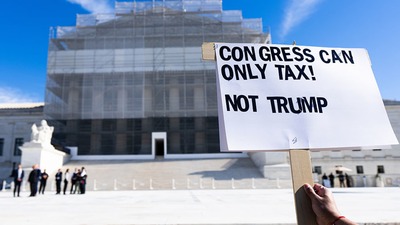
The Supreme Court ruled 6-3 that Trump's IEEPA-based tariffs exceeded presidential authority, prompting an immediate White House response: a new 10% global import duty under a different statute. Meanwhile, Trump set a 10-15 day deadline for Iran to reach a nuclear agreement as congressional Democrats demanded authorization before any military action.
Supreme Court Strikes Down Trump's Emergency Tariffs 6-3; White House Counters With New 10% Global Duty
The Supreme Court ruled on February 20 that President Donald Trump's sweeping emergency tariffs — imposed under the International Emergency Economic Powers Act (IEEPA) — exceeded the statutory authority Congress granted under that law. The 6-3 decision was authored by Chief Justice John Roberts and joined by Justices Sotomayor, Kagan, Jackson, Gorsuch, and Barrett. Legal observers noted it represented the most significant judicial check on presidential economic authority in decades, with comparisons drawn to the Supreme Court's reversal of New Deal policies in the 1930s.
The majority reached its conclusion through two lines of reasoning. The three conservative justices in the majority — Roberts, Gorsuch, and Barrett — applied the major questions doctrine, holding that policies of such sweeping economic significance require explicit congressional authorization. The three liberal justices — Sotomayor, Kagan, and Jackson — agreed IEEPA does not authorize tariffs, but based their conclusions on standard statutory interpretation. Justices Thomas, Kavanaugh, and Alito dissented. Trump responded on social media, calling the justices in the majority a disgrace.
Within hours of the ruling, the White House announced that President Trump signed a proclamation imposing a temporary 10% ad valorem import duty on goods entering the United States, this time invoking Section 122 of the Trade Act of 1974 — a separate legal authority. The new duty is scheduled to take effect February 24 and will remain in place for 150 days. It includes exemptions for critical minerals, pharmaceuticals, energy products, and certain agricultural goods. The administration stated the measure is aimed at correcting a balance-of-payments deficit and incentivizing domestic production.
Trump Sets 10-15 Day Iran Nuclear Deadline as Military Forces Mass in Region; Democrats Demand Congressional Vote
President Trump stated on February 20 that he is considering limited military strikes against Iran and warned Tehran it has "10, 15 days, pretty much maximum" to reach a nuclear agreement with Washington. Speaking at a White House breakfast, Trump said there would be an unfortunate outcome if no deal is reached. The U.S. military has continued a significant buildup of naval and air assets in the Middle East, with reports indicating forces were positioned to strike as early as the weekend, though Trump indicated no final decision had been made.
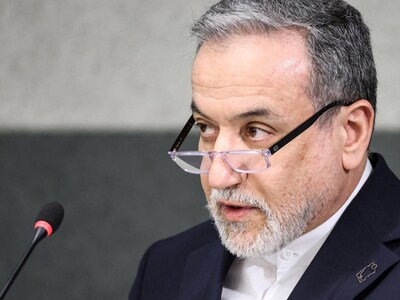
Iran's Foreign Minister Abbas Araghchi described the U.S. military buildup as unnecessary and unhelpful, while also signaling that a diplomatic resolution remains achievable and that Iran is prepared for peace. Indirect talks between U.S. and Iranian negotiators held in Geneva earlier in the week concluded without resolution, though both sides said they had agreed on a set of guiding principles. U.S. Vice President JD Vance indicated Iran had not acknowledged the red lines set by the Trump administration on the nuclear program.
Several senior House Democrats — the ranking members of the Foreign Affairs, Intelligence, and Armed Services committees, including Representatives Gregory Meeks, Adam Smith, and Jim Himes — wrote to the administration urging it not to conduct military action against Iran without first obtaining congressional authorization. The lawmakers cited the Constitution's war powers provisions and warned that unilateral strikes could endanger U.S. personnel and escalate into a broader regional conflict.
Qué Puedes Hacer
Read the Supreme Court's Tariff Decision
Access SCOTUSblog's breakdown of the ruling in Learning Resources, Inc. v. Trump and the full opinion via Justia.
Review the White House Import Duty Proclamation
Read the official presidential proclamation on the new 10% temporary import surcharge and the accompanying fact sheet.
Este contenido busca un reportaje objetivo. SuperPage no respalda ningún candidato, partido o posición política.