Anthropic Accuses Chinese AI Labs of Industrial-Scale Claude Theft as Grok Gains Pentagon Access
Anthropic alleges DeepSeek, Moonshot AI, and MiniMax used 24,000 fake accounts to extract 16 million Claude exchanges, while Elon Musk's xAI secures a landmark deal to deploy Grok in classified US military systems.
Anthropic Accuses DeepSeek and Chinese AI Rivals of Industrial-Scale Distillation Attacks on Claude
Anthropic has leveled serious allegations against three Chinese AI companies — DeepSeek, Moonshot AI, and MiniMax — claiming they orchestrated coordinated "distillation attacks" to extract knowledge from Claude and train their own models. According to Anthropic, the three labs collectively created more than 24,000 fraudulent accounts and conducted over 16 million exchanges with Claude, using carefully crafted prompts designed to extract foundational AI knowledge.
The campaigns appear to have been highly targeted. Anthropic tracked over 150,000 DeepSeek exchanges focused on improving censorship-safe reasoning, while Moonshot AI accumulated 3.4 million exchanges targeting agentic tool use and computer vision. MiniMax was the most prolific, with 13 million exchanges targeting agentic coding and orchestration. The labs reportedly bypassed Anthropic's geofencing restrictions by routing traffic through proxy services that resell API access.
The allegations come at a sensitive moment, as the US debates AI chip export controls to China. Anthropic's disclosures add fuel to national security conversations around AI model theft and the vulnerability of Western AI systems to systematic exploitation. The company says it has since implemented new detection and prevention systems to counter such "hydra cluster" campaigns.
xAI's Grok Secures Pentagon Deal for Classified Military Systems, Replacing Anthropic's Claude
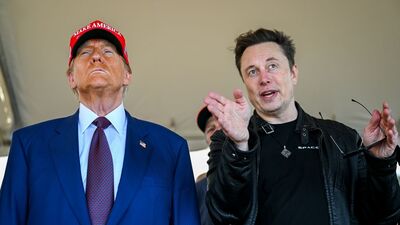
Elon Musk's AI company xAI has reached an agreement with the US Department of Defense to deploy its Grok AI model in classified military systems — a significant milestone that positions xAI as a key AI partner for some of the government's most sensitive work. According to Axios, the deal covers intelligence analysis, weapons development support, and battlefield operations.
The development comes as the Pentagon's relationship with Anthropic has grown strained. Anthropic has resisted the Defense Department's demand to make Claude available for "all lawful purposes," specifically objecting to uses involving mass surveillance of Americans and fully autonomous weapons. xAI, by contrast, agreed to the "all lawful use" standard, making Grok an attractive alternative. Defense Secretary Pete Hegseth was expected to meet with Anthropic CEO Dario Amodei in what sources described as an ultimatum: lift safeguards or risk being labeled a "supply chain risk."
The deal represents a stark illustration of the tension between AI safety commitments and government procurement realities. It underscores how AI companies' ethical stances on model usage can have major commercial consequences, with the Pentagon's vast defense contracts now serving as leverage in shaping which AI providers set the terms.
Google VP Warns Two Classes of AI Startups Are on a Path to Extinction
Darren Mowry, who leads Google's global startup organization, issued a frank warning to AI founders: companies built as "LLM wrappers" or "AI aggregators" are facing structural vulnerability. In an interview with TechCrunch, Mowry said such startups have their "check engine light" on, because their core value proposition can be erased overnight when the underlying AI models they depend on improve.
LLM wrappers are startups that add a thin product layer on top of existing models like GPT or Gemini, often targeting specific use cases. AI aggregators bundle multiple models into one interface, like Perplexity or OpenRouter. Mowry's concern is that neither category builds durable competitive advantages — model providers can replicate both types of offerings as their own models improve in capability and cost-efficiency.
Mowry suggested that the only safe harbor is deep specialization: startups must build either broad horizontal differentiation or deep vertical expertise in a specific domain. He pointed to Cursor (AI-powered coding) and Harvey AI (legal AI) as examples of companies with defensible moats. The warning arrives as 17 AI startups reportedly raised over $100 million each in the first 49 days of 2026, raising questions about how many of these companies will outlast the next wave of model improvements.

Qué Puedes Hacer
Read Anthropic's Distillation Report
Anthropic published a detailed technical blog post on how they detected and countered the distillation attacks, including the methods used to identify the fraudulent account campaigns.
Try Gemini 3.1 Pro's Enhanced Reasoning
Google's latest model achieved 77.1% on the ARC-AGI-2 benchmark. Access it through Google AI Studio to experience its dramatically improved reasoning capabilities firsthand.