Perplexity Launches 19-Model AI Agent as Meta Signs $100B AMD Chip Deal
Perplexity's 'Computer' debuts as a multi-model autonomous worker, while Meta's landmark AMD deal reshapes AI infrastructure and Anthropic publicly accuses Chinese labs of large-scale model theft.
Perplexity Launches 'Computer': A 19-Model AI Agent That Runs Projects Autonomously for Months
Perplexity AI introduced 'Computer' on February 25, a multi-model orchestration platform that deploys 19 specialized AI systems to autonomously handle complete projects — from market research to software development — without requiring users to re-prompt at each step. Unlike a standard chatbot, Computer accepts a desired outcome and independently breaks the job into subtasks, spawning parallel sub-agents that can operate for hours or even months.
The platform draws from a roster of frontier models. Claude Opus 4.6 handles orchestration logic and coding, Google's Gemini powers deep research, xAI's Grok manages speed-sensitive tasks, and OpenAI's GPT-5.2 handles long-context recall. CEO Aravind Srinivas positioned Computer as a direct alternative to OpenAI's OpenClaw, describing it as a safer agentic system accessible to non-experts.
Computer is available to Perplexity Max subscribers at $200 per month and maintains persistent memory across interactions. The launch marks a significant step in the race toward autonomous AI workers capable of replacing — or dramatically augmenting — entire human workflows.

Meta Signs $100 Billion AMD Chip Deal to Break Free from Nvidia Dependence
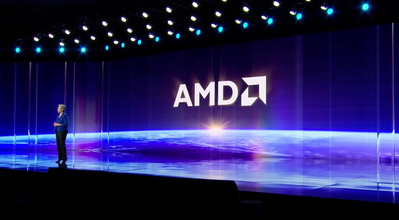
Meta struck a landmark agreement with AMD last week, committing to purchase up to $100 billion worth of chips — primarily the MI540 series GPUs and EPYC CPUs — enough to drive approximately six gigawatts of data center power. The deal is designed to reduce Meta's reliance on Nvidia, which has held pricing power over the AI compute market for several years. First gigawatt deployments are set to begin in the second half of 2026.
As part of the arrangement, AMD issued Meta warrants to purchase roughly 160 million shares — approximately 10% of the company — at just $0.01 per share, giving Meta meaningful equity upside if AMD's market position strengthens. Meta CEO Mark Zuckerberg has described the company's long-term goal as building 'personal superintelligence,' and Meta has pledged at least $600 billion in U.S. data center and AI infrastructure investment over coming years, with $135 billion budgeted for 2026 alone.
The deal signals a broader shift in the AI chip market away from Nvidia's near-monopoly toward a multi-vendor ecosystem. Just days prior, Meta had also expanded a separate Nvidia GPU agreement, suggesting the company is diversifying rather than replacing its silicon partnerships.
Anthropic Accuses DeepSeek, Moonshot, and MiniMax of Stealing Claude's Capabilities
Anthropic publicly accused three Chinese AI companies — DeepSeek, Moonshot, and MiniMax — of conducting coordinated 'distillation attacks' against its Claude model. According to Anthropic, the three firms collectively generated over 16 million exchanges with Claude using approximately 24,000 fraudulently created accounts, routing traffic through proxy services to bypass geofencing and usage restrictions.
The targeted capabilities were Claude's most differentiated: agentic reasoning, tool use, and coding. Anthropic alleges the Chinese labs used Claude's responses en masse — either to directly train their own models or as reinforcement learning data. The company's technical report describes synchronized account clusters, with one 'hydra cluster' running tens of thousands of simultaneous sessions.
Both Anthropic and OpenAI — which has made similar accusations — framed the behavior as a national security concern, warning that distilled models trained this way may lack safety guardrails and could enable authoritarian governments to deploy frontier AI for offensive cyber operations, disinformation campaigns, and mass surveillance. The accusations arrived as U.S. policymakers debate further restrictions on AI chip exports to China.
Salesforce Posts Record $11.2B Quarter as Agentforce ARR Surges 169% to $800M
Salesforce reported record Q4 fiscal 2026 revenue of $11.18 billion on February 25, an 11.7% year-over-year increase, with its agentic AI platform Agentforce emerging as the primary growth engine. Agentforce annual recurring revenue reached $800 million — up 169% year-over-year — and the company closed 29,000 Agentforce deals during the quarter, up 50% from the prior quarter. Combined ARR for Agentforce and Data Cloud reached approximately $1.8 billion, up from $1.4 billion just three months prior.
The most striking figure was the 11.14 trillion tokens served by Salesforce's platform during the quarter — a clear signal that enterprise customers have moved beyond pilots and are deploying AI agents at full production scale. More than 60% of Q4 Agentforce bookings came from existing customer expansions rather than new wins, suggesting strong retention and growing adoption depth.
Salesforce initiated full-year FY2027 revenue guidance of $45.8 to $46.2 billion, implying 10–11% growth. The results validate a broader industry trend: the transition from generative AI experimentation to deployed, production-grade agentic systems is now well underway in enterprise software.
Qué Puedes Hacer
Try Perplexity Computer
Explore the new multi-model digital worker platform and see how it handles autonomous, long-running projects.
Read Anthropic's Distillation Attack Report
Anthropic published a detailed technical post on detecting and preventing distillation attacks — essential reading for anyone building or deploying AI systems.