U.S.-Israel Strikes on Iran Enter Day Three as Congress Battles Over War Authority
Joint U.S. and Israeli military operations in Iran continued for a third consecutive day, with Iran retaliating by striking the U.S. Embassy in Riyadh. Meanwhile, a bipartisan coalition in Congress pressed ahead with resolutions to require presidential authorization for further military action.
U.S.-Israel Military Operation Against Iran Expands as Iranian Drones Strike U.S. Embassy in Riyadh
The third day of joint U.S. and Israeli military strikes on Iran brought expanding conflict across the Middle East, as Iran launched retaliatory drone attacks that struck the U.S. Embassy compound in Riyadh, Saudi Arabia. Saudi defense officials confirmed the attack caused "limited fire and minor material damage" with no reported casualties, as the embassy had been evacuated. Iran's Islamic Revolutionary Guard Corps claimed responsibility, stating it was targeting "American political centers" in the region.
President Trump, speaking at a White House Medal of Honor ceremony, said the U.S. expected the military campaign to last "four to five weeks" if necessary. Six U.S. service members have been killed in the ongoing conflict, according to NPR. The operation, which began on February 28, has struck more than 2,000 targets across Iran. Iranian Supreme Leader Ali Khamenei was killed in the initial strikes, with Iran's government confirming his death on March 1 after his whereabouts had been identified using CIA intelligence, according to multiple reports. Secretary of State Marco Rubio stated that the United States military had not yet delivered its most powerful strikes, saying the "hardest hits are yet to come."
Iran's retaliatory attacks spread beyond Saudi Arabia, with explosions reported in Qatar, the UAE, and Kuwait. The Iranian Red Crescent Society reported more than 550 people killed on the Iranian side since the strikes began. Trump vowed to "avenge" the deaths of U.S. service members and said combat operations would continue.

Congress Moves to Limit Trump's War Powers in Iran with Bipartisan Resolutions
A bipartisan coalition of lawmakers moved on March 2 to limit President Trump's ability to continue military operations in Iran without congressional authorization. In the Senate, Democratic Sen. Tim Kaine of Virginia and Republican Sen. Rand Paul of Kentucky introduced a resolution requiring explicit congressional approval before further military action against Iran. A parallel measure in the House, sponsored by Republican Rep. Thomas Massie of Kentucky and Democratic Rep. Ro Khanna of California, seeks to compel the administration to halt unauthorized military action.
House Speaker Mike Johnson told Republican colleagues to expect a vote on a war powers resolution Thursday. Senate Minority Leader Chuck Schumer said after a classified briefing on the Iran campaign, "I found their answers completely and totally insufficient" and that the briefing "raised many more questions than it answered." The strikes on Iran were launched without a congressional declaration of war or authorization, raising constitutional questions about the scope of presidential war-making authority under Article 1 of the Constitution, which reserves the power to declare war to Congress.
Both resolutions face significant hurdles in becoming law. Even if either measure passes Congress, President Trump would be highly unlikely to sign legislation limiting his military authority, and experts noted that previous congressional war powers efforts have consistently failed. Legal scholars noted the effort reflects the ongoing institutional tension between executive war-making and congressional oversight.
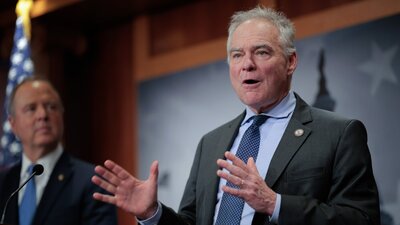
Senate Advances Bipartisan Housing Supply Bill 84-6 in Procedural Vote
The U.S. Senate voted 84-6 on Monday to advance the 21st Century ROAD to Housing Act, a sweeping bipartisan housing package co-led by Banking Committee Chairman Tim Scott (R-SC) and Ranking Member Elizabeth Warren (D-MA). The lopsided procedural vote signals broad bipartisan appetite for legislation that supporters say would represent the largest federal housing package in decades. The bill aims to reduce the housing shortage by streamlining environmental reviews, modernizing manufactured housing regulations, unlocking private investment, and updating multifamily financing tools.
A notable provision in the bill would ban large institutional investors — defined as companies with investment control of 350 or more single-family homes — from purchasing additional residential properties. The legislation also includes a temporary prohibition on the Federal Reserve issuing a central bank digital currency (CBDC), a provision added during bipartisan negotiations. Sen. Scott described the legislation as focused on "cutting regulatory red tape, lowering costs, and expanding housing supply while generating no new spending."
The bill moves toward a final Senate vote following the procedural advance. Its path in the House remains uncertain amid differences between the chambers on housing policy approaches. The National Low Income Housing Coalition acknowledged the bill's progress while noting areas where advocates sought stronger tenant protections.
Qué Puedes Hacer
Read the Full 21st Century ROAD to Housing Act Text
Access the complete bill text and section-by-section summary on the Senate Banking Committee official website.
Review Congressional War Powers Resolutions
Track the bipartisan Senate and House resolutions on Congress.gov to understand the proposed limits on executive military authority in Iran.
Este contenido busca un reportaje objetivo. SuperPage no respalda ningún candidato, partido o posición política.