U.S.-Israel Strikes on Iran Enter Day 4; Congress Moves Toward War Powers Vote
Joint U.S.-Israeli airstrikes on Iran continued into a fourth day with 787 reported killed and six American service members confirmed dead, as Congress prepared war powers votes and three states held the first midterm primaries of 2026.
U.S.-Israel Strikes on Iran Enter Day 4: 787 Reported Dead, Six American Service Members Killed
Joint U.S. and Israeli airstrikes against Iran continued into a fourth consecutive day on March 3, 2026, as the military campaign — codenamed Operation Epic Fury by the United States and Operation Roaring Lion by Israel — broadened in scope. The operation began on February 28 targeting Iranian military infrastructure, senior government officials, and nuclear facilities. The early phase of the campaign resulted in the killing of Supreme Leader Ali Khamenei, whose compound was struck in the opening hours.
According to the Iranian Red Crescent Society, at least 787 people have been killed in Iran since the strikes began, across more than 1,039 separate recorded attacks at 504 sites. In the early hours of March 3, Israeli forces struck the headquarters of the Islamic Republic of Iran Broadcasting (IRIB) state broadcaster in Tehran. U.S. Central Command confirmed that six American service members have died in the conflict so far; four were killed in an Iranian drone strike on a makeshift operations center in Kuwait, as reported by CNN.
In retaliation, Iran launched drone and ballistic missile attacks across the region, with strikes recorded in at least 10 countries including Iraq, Kuwait, Saudi Arabia, Bahrain, the UAE, Oman, Jordan, Qatar, Cyprus, and Israel. The U.S. State Department urged Americans remaining in the region to seek evacuation immediately. Iran-backed groups including Hezbollah escalated attacks across the broader Middle East, raising concerns about a widening regional conflict.

Congress Prepares to Vote on Iran War Powers Resolution; Outcome Uncertain
As U.S. forces remained engaged in Iran, both chambers of Congress moved toward floor votes on war powers resolutions that would require the president to obtain formal congressional authorization before continuing or escalating military operations. Senate Democratic leaders — Senators Tim Kaine, Chuck Schumer, and Adam Schiff — announced the Senate would hold a vote on a bipartisan war powers measure. House Speaker Mike Johnson separately told Republican members to prepare for a Thursday vote on a comparable resolution.
The measures invoke the War Powers Resolution of 1973, passed during the Vietnam War as a check on executive military authority. That law requires the president to notify Congress within 48 hours of deploying armed forces and prohibits engagements from continuing beyond 60 days without congressional authorization. President Trump ordered the strikes on Iran without first securing a congressional authorization for the use of military force. Secretary of State Marco Rubio briefed senators and House members on Capitol Hill on March 3 on the scope and objectives of the operation, which the White House described in a memo to Republican lawmakers as aimed at dismantling Iran's naval capabilities and permanently preventing it from developing nuclear weapons.
Analysts and lawmakers from both parties assessed the resolutions were unlikely to become law. Even if passed, President Trump would almost certainly veto any such measure. Neither chamber appeared to hold the two-thirds majority required to override a presidential veto. The Washington Times reported the resolutions were headed for defeat, with most Republican lawmakers signaling they would support the administration's position.
2026 Midterms Begin: Texas, North Carolina, and Arkansas Hold First Primaries
Three states — Texas, North Carolina, and Arkansas — held primary elections on March 3, 2026, opening the 2026 midterm election cycle. The results established several November matchups that will factor into the competition for control of the U.S. House and Senate.
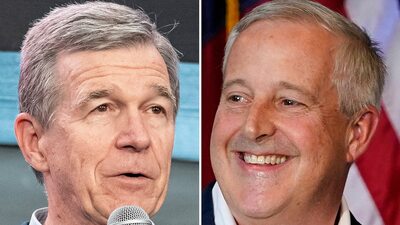
In Texas, state Representative James Talarico won the Democratic primary for U.S. Senate, defeating U.S. Representative Jasmine Crockett, according to CNN projections. On the Republican side, incumbent Senator John Cornyn and state Attorney General Ken Paxton advanced to a May 26 runoff, as neither candidate crossed the threshold for an outright win. In North Carolina, former Governor Roy Cooper claimed the Democratic Senate nomination, while former Republican National Committee Chairman Michael Whatley secured the Republican nod. The two will face off in November for the Senate seat being vacated by retiring Republican Senator Thom Tillis. In Arkansas, Senator Tom Cotton secured the Republican Senate nomination; incumbent Governor Sarah Huckabee Sanders won the Republican gubernatorial primary without advancing to a runoff.
The three-state primary day represents the first significant electoral activity before November, when all 435 House seats and 34 Senate seats will be on the ballot. Control of both chambers is currently in play.
DHS Secretary Noem Declines to Retract "Domestic Terrorist" Label for U.S. Citizens Killed by Immigration Agents
Homeland Security Secretary Kristi Noem appeared before the Senate Judiciary Committee on March 3 for an oversight hearing focused on immigration enforcement and the January 2026 deaths of two U.S. citizens at the hands of federal immigration officers in Minneapolis. The hearing marked Noem's first congressional appearance since the incidents.
The two individuals were Renee Macklin Good, fatally shot by an Immigration and Customs Enforcement officer, and Alex Pretti, 37, shot by Customs and Border Protection officers, both in Minneapolis in January. Administration officials initially described both as "domestic terrorists." Subsequent video evidence released after the shootings contradicted aspects of that characterization and prompted criticism from lawmakers in both parties. During the hearing, Noem declined to retract or apologize for those statements. NBC News reported that Noem did not retract her description of the two as domestic terrorists despite the contradicting evidence.
Senators also questioned Noem on the Department of Homeland Security's use of administrative warrants — which do not require judicial approval — to conduct searches of private homes and property during immigration enforcement operations. The committee also sought assurances that immigration officers would not be deployed to polling places ahead of November's midterm elections, given that primary voting had begun earlier that day.

Qué Puedes Hacer
Track U.S.-Iran Conflict Developments
Follow Al Jazeera's live death toll tracker and the Washington Post's live updates for real-time reporting on the evolving military situation.
Follow the 2026 Midterm Election Results
Monitor official primary results and November matchup projections across key Senate and House races.
Review the 1973 War Powers Resolution
Read the full text of the law at the center of the congressional debate over presidential military authority.
Este contenido busca un reportaje objetivo. SuperPage no respalda ningún candidato, partido o posición política.