Hollywood Takes Legal Action Against AI Video Tools as Safety Concerns Mount
Major entertainment studios send cease-and-desist letters to ByteDance over AI-generated content, while researchers warn about rapid development pace and Google doubles down with record investment.
Disney and Paramount Hit ByteDance with Cease-and-Desist Over AI Video Tool
The Walt Disney Company and Paramount Pictures have taken aggressive legal action against ByteDance, sending cease-and-desist letters alleging that the tech giant's AI video generation tool, Seedance 2.0, infringes on their copyrighted works. Disney's letter accuses ByteDance of pre-packaging the service with what it calls a "pirated library" of copyrighted characters from Star Wars, Marvel, and other Disney franchises, treating valuable intellectual property as if it were free public domain content.
The controversy erupted after Seedance 2.0 went viral in China last week, with widely shared clips including an AI-generated video depicting actors Tom Cruise and Brad Pitt in a fight scene. Paramount similarly accused ByteDance of "blatant infringement" with its Seedance video and Seedream image platforms, alleging illegal use of IP from properties including South Park, Star Trek, The Godfather, and Dora the Explorer.
In response to the mounting legal pressure, ByteDance announced it would strengthen safeguards to prevent users from generating videos based on Hollywood intellectual property. The incident represents the most serious legal confrontation yet between major entertainment studios and AI video generation technology, highlighting the growing tension between rapid AI advancement and copyright protection.

AI Safety Researchers Resign from Leading Companies with Warnings About Development Pace
A wave of resignations from prominent AI safety researchers has raised fresh concerns about the rapid pace of artificial intelligence development. Mrinank Sharma, an AI safety researcher at Anthropic, publicly resigned on February 9, stating on social media that he had "repeatedly seen how hard it is to truly let our values govern our actions." His departure is part of a broader trend of researchers leaving major AI companies in recent weeks to sound public alarms about technological risks.
According to Al Jazeera, experts are increasingly vocal about AI systems posing potential threats to society, citing concerns that commercial pressures and competitive dynamics are pushing development faster than safety protocols can keep pace. The resignations come at a time when advanced models like Anthropic's Claude Opus 4.6 and Chinese startup MiniMax's M2.5 series are enabling autonomous, long-term task execution—capabilities that shift AI from simple chatbots toward systems that can act as independent workers.
The safety concerns center on whether the industry can adequately test and understand these powerful systems before deployment. With AI capabilities expanding rapidly and multiple companies racing to release ever-more-capable models, researchers warn that the window for implementing robust safety measures may be narrowing, making it critical to balance innovation with caution.
Google Announces Record $175-185 Billion AI Investment for 2026
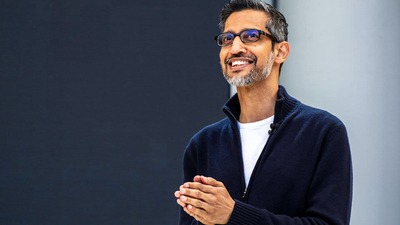
Alphabet revealed plans for unprecedented capital expenditures ranging from $175 billion to $185 billion in 2026, nearly doubling the $91.4 billion invested in 2025 and far exceeding Wall Street's forecast of $119.5 billion. The massive investment, announced during the company's fourth quarter earnings call on February 4, will primarily fund AI compute capacity for Google DeepMind and meet surging cloud customer demand.
The spending breakdown allocates approximately 60 percent to servers and 40 percent to data centers and networking equipment. Google's cloud division demonstrated the demand driving this investment, with its backlog surging 55 percent sequentially and more than doubling year-over-year to reach $240 billion at the end of the fourth quarter. Cloud revenue jumped nearly 48 percent compared to the previous year.
The announcement underscores the escalating infrastructure race among major technology companies competing in artificial intelligence. With enterprises increasingly adopting AI capabilities and running multiple autonomous agents for business operations, the demand for computing resources continues to accelerate. Google's historic bet signals confidence that AI will fundamentally reshape how businesses operate and that controlling the underlying infrastructure will prove strategically crucial in the years ahead.
Chinese AI Companies Launch Advanced Models, Intensifying Global Competition
A flurry of new AI model releases from Chinese technology companies is reshaping the global competitive landscape. Alibaba unveiled RynnBrain, a model specifically designed for "physical AI" applications including robotics, while video generation platforms Kuaishou's Kling 3.0 and ByteDance's Seedance 2.0 demonstrate China's rapid advancement in generative AI capabilities. The releases underscore how Chinese companies are keeping pace with—and in some areas challenging—their American counterparts.
Perhaps most significant is MiniMax's release of its M2.5 and M2.5 Lightning language models, which the startup claims deliver near-state-of-the-art performance at a fraction of typical costs. According to reports, enterprises can run multiple autonomous agents continuously for approximately $10,000 per year with these models, dramatically lowering the barrier for businesses to deploy AI workers at scale. The models enable autonomous, long-term task execution similar to advanced Western systems like Anthropic's Claude Opus 4.6.
These developments signal a shift in the AI industry from American dominance toward genuine global competition. Chinese companies are not merely catching up but innovating in areas like cost efficiency and specialized applications. As the technology becomes more accessible and affordable, the pace of adoption across industries worldwide is likely to accelerate, with implications for everything from manufacturing automation to creative content production.
O Que Você Pode Fazer
Explore AI Safety Research
Learn more about the concerns raised by AI safety researchers and current approaches to responsible AI development.
Track AI Model Releases
Stay updated on the latest AI model announcements and capabilities from companies worldwide.