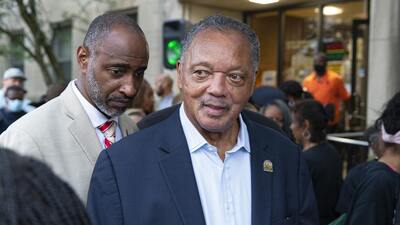
Rev. Jesse Jackson, Civil Rights Icon and Two-Time Presidential Candidate, Dies at 84
Civil rights leader Rev. Jesse Jackson passed away Tuesday, drawing tributes from across the political spectrum. Meanwhile, US-Iran nuclear talks in Geneva reported progress, and the Munich Security Conference highlighted growing strains in transatlantic relations.
Rev. Jesse Jackson, Pioneering Civil Rights Leader and Presidential Candidate, Dies at 84
The Reverend Jesse Jackson, a towering figure in the American civil rights movement and a two-time Democratic presidential candidate, died peacefully on Tuesday morning, February 17, 2026, surrounded by his family at his home in Chicago. He was 84 years old. Jackson had been battling progressive supranuclear palsy, a degenerative neurological condition, in his final months.
Jackson rose to national prominence as a close associate of Dr. Martin Luther King Jr. and went on to found the Rainbow PUSH Coalition, a civil rights organization he led for decades. His 1984 and 1988 presidential campaigns made history by winning millions of votes in Democratic primaries, expanding political participation among Black Americans and other minority communities in ways that reshaped the Democratic Party.
Tributes arrived from across the political spectrum. Former President Barack Obama described Jackson as "a true giant," while President Donald Trump called him "a force of nature like few others before him." Jackson's death marks the passing of one of the last major civil rights leaders who worked alongside Dr. Martin Luther King Jr. and directly shaped American political life for over half a century.
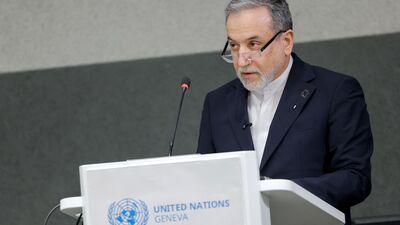
US and Iran Report Progress in Second Round of Geneva Nuclear Talks
Iran and the United States held a second round of nuclear negotiations at Oman's embassy in Geneva, Switzerland on Tuesday, with Iranian Foreign Minister Abbas Araghchi describing the outcome as showing "good progress." Araghchi stated that both sides had reached an understanding on the guiding principles for a potential agreement and indicated Iran would present detailed proposals within two weeks to address remaining differences in their positions.
The talks, brokered by Oman, represent a resumption of diplomacy after previous negotiations broke down following an Israeli military campaign against Iran that escalated into a brief armed conflict. The United States has simultaneously been increasing its military posture in the region, deploying a second aircraft carrier strike group and repositioning fighter jets to the Gulf area. Israeli Prime Minister Benjamin Netanyahu separately called publicly for any agreement to require the complete dismantling of Iran's nuclear infrastructure.
No final agreement was reached during Tuesday's session, and the Washington Post reported the talks concluded without a breakthrough. The negotiations carry significant implications for regional security, global energy markets, and the broader non-proliferation framework. Iran's Revolutionary Guard conducted military exercises in the Strait of Hormuz concurrently with the Geneva talks.
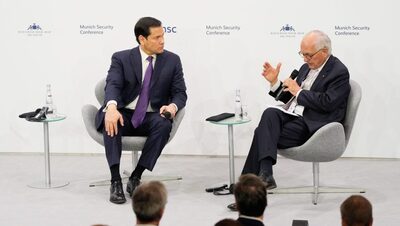
Munich Security Conference Exposes Deepening Divide Between US and European Allies
The 2026 Munich Security Conference, held under the theme "Under Destruction," brought together government leaders, defense ministers, and security officials from across the Western alliance, but laid bare significant friction between the United States and its European partners. The conference's own report opened with the line that "the world has entered a period of wrecking-ball politics," setting a tone of institutional strain throughout the proceedings.
Secretary of State Marco Rubio addressed the gathering and struck a more conciliatory tone than Vice President JD Vance's speech at the previous year's conference. Rubio signaled that Washington preferred to preserve its partnership with Europe. However, his remarks still drew a public pushback from Kaja Kallas, the European Union's foreign policy chief, who voiced skepticism about American reliability as a long-term strategic partner.
A bipartisan group of US lawmakers also attended, with Democratic members expressing alarm about the trajectory of transatlantic relations. According to NPR, European officials increasingly view the United States as an unreliable ally, with some describing the change in the relationship as fundamental. The Munich conference underscored ongoing questions about NATO cohesion and coordinated Western policy on Ukraine and other shared security challenges.
O Que Você Pode Fazer
Learn More About Jesse Jackson's Legacy
Explore his civil rights career, historic presidential campaigns, and decades of advocacy through archival and reference sources.
Follow the US-Iran Nuclear Negotiations
Track the Geneva talks and their implications through international news coverage and IAEA updates.
Read the 2026 Munich Security Report
Access the full report for in-depth analysis of global security trends and the state of the transatlantic alliance.
Este conteúdo visa reportagem factual. SuperPage não endossa nenhum candidato, partido ou posição política.