Congress Rejects Iran War Powers Resolutions as Strikes Enter Day Six
Both chambers of Congress voted to maintain President Trump's authority over ongoing military operations in Iran, while U.S. and Israeli strikes entered their sixth day and casualty counts rose.
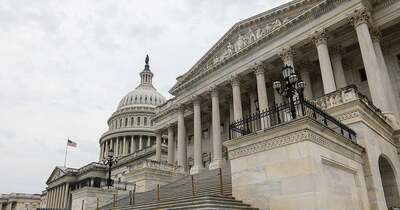
House Narrowly Rejects War Powers Resolution to Halt Iran Strikes, 219-212
The U.S. House of Representatives voted 219-212 on March 5 to defeat a resolution that would have required congressional authorization for the Trump administration to continue military operations against Iran. The measure, co-sponsored by Rep. Ro Khanna (D-CA) and Rep. Thomas Massie (R-KY), was introduced under the 1973 War Powers Act and would have directed the president to remove U.S. armed forces from what the resolution termed "unauthorized hostilities" in Iran. Four Democrats — Reps. Greg Landsman (OH), Jared Golden (ME), Henry Cuellar (TX), and Juan Vargas (CA) — voted against the resolution alongside nearly all Republicans, while Massie and one other Republican crossed party lines to support it.
The House vote came one day after the Senate rejected a similar measure 53-47, with only a handful of Republicans joining Democrats in that chamber. House Speaker Mike Johnson (R-LA) opposed the resolution, stating it "plays right into the hands of the enemy" and characterizing the operation as "limited in scope and duration" with a mission he described as "nearly accomplished by all estimates." Massie, for his part, suggested some colleagues were reluctant to go on record because the U.S. has "a terrible track record of meddling in the Middle East."
The twin rejections leave the administration with broad discretion to continue military operations without a formal congressional authorization, reigniting a longstanding debate over the separation of war-making powers between the executive and legislative branches. Critics of the strikes, including Sen. Tim Kaine (D-VA), argued that the administration had provided no evidence — even in classified settings — that Iran posed an imminent threat to the United States.
US-Israel Strikes on Iran Enter Day Six; Trump Says He Wants Role in Selecting Iran's Next Leader
U.S. and Israeli military operations against Iran continued on March 5, the sixth consecutive day of strikes that began on February 28. U.S. and Israeli forces announced a new wave of strikes targeting ballistic missile infrastructure in and around Tehran overnight. Iran's Ministry of Foreign Affairs accused the U.S. and Israel of hitting 33 civilian sites, including hospitals, schools, residential areas, the Tehran Grand Bazaar, and the historic Golestan Palace complex. Iranian health authorities reported the death toll had surpassed 920, with preliminary combined figures from various sources estimating more than 1,300 killed across Iran, Israel, Gulf states, and among U.S. service members.
A notable development on day six was a statement by President Trump expressing a desire to participate in choosing Iran's future leadership. "We want to be involved in the process of choosing the person who is going to lead Iran into the future," Trump said publicly. The strikes have also included naval action: a U.S. submarine fired a torpedo and sank an Iranian frigate, the Iris Dena, in the Indian Ocean off the southern coast of Sri Lanka, according to reports. Sri Lanka's navy is said to have recovered 87 bodies and rescued 32 survivors. Kurdish-Iranian armed groups reportedly launched a ground offensive in northwest Iran, adding another dimension to the rapidly evolving conflict.
The strikes began on February 28 and initially targeted Iran's nuclear facilities. The conflict has since widened, drawing in regional actors and disrupting global energy markets. The Strait of Hormuz has been described as effectively closed, contributing to significant disruptions in oil supply. The United Nations and multiple international bodies have called for a ceasefire. Iran has vowed to retaliate, and Iranian drones have been reported in neighboring Azerbaijan.

Roll Call Study: 2025 Was the Most Partisan Year in Congressional Voting History
A vote study published by Roll Call on March 5 found that 2025 set an all-time record for partisanship in congressional floor voting. An estimated 85.3 percent of roll call votes in 2025 were "party unity votes" — defined as votes where a majority of each party voted on opposite sides — surpassing the previous record of 74.6 percent set in 2023 by more than 10 percentage points. The study attributed the sharp increase in part to unified Republican control of the White House and both chambers of Congress for the first time since 2017.
Senate Republicans had a particularly dominant run, winning 577 of 616 total party unity votes for a success rate of 93.7 percent — the highest in the history of the study. On votes where President Trump took a public position, he received support from 96 percent of Senate Republicans and 95 percent of House Republicans. The House figure broke the previous record of 93 percent, set in 2017. The sweeping reconciliation package that extended and expanded the 2017 tax cuts passed Congress without a single Democratic vote and was cited as a prominent example of the partisan dynamic.
The study also noted that Democratic cohesion remained high in opposition, with 34 House Democrats and three Senate Democratic Caucus members voting with their caucus on every party unity vote during the year. While majority parties typically achieve higher unity scores, the gap between the 2025 figures and historical norms was described by Roll Call as without precedent in their decades of tracking congressional voting patterns.
O Que Você Pode Fazer
Track the Iran War Powers Vote Details
Review the official House roll call record for the March 5 war powers vote to see how each representative voted.
Follow Live Updates on the Iran Conflict
Stay current with evolving developments in the U.S.-Israel-Iran conflict through live coverage from major news outlets.
Read the Full Roll Call Vote Study
Access Roll Call's complete analysis of 2025 congressional voting patterns and partisanship trends.
Este conteúdo visa reportagem factual. SuperPage não endossa nenhum candidato, partido ou posição política.