53 Medical Schools Pledge Nutrition Overhaul as New Research Highlights Diet and Pesticide Risks
Health Secretary RFK Jr. secures commitments from 53 medical schools to expand nutrition training, while new research validates the FDA's updated 'healthy' food definition and links popular produce to higher pesticide exposure.
53 Medical Schools Commit to 40 Hours of Nutrition Education Starting Fall 2026
U.S. Health Secretary Robert F. Kennedy Jr. announced on March 5, 2026 that 53 medical schools across 31 states have voluntarily committed to expanding nutrition education for future doctors. Under the initiative, participating schools will provide at least 40 hours of nutrition education — or an equivalent competency — to students starting in the fall of 2026. Schools have also agreed to review current training, appoint a faculty leader for nutrition, and publish a public-facing page outlining their plan.
The push comes amid longstanding concerns about the gap in nutritional training at U.S. medical schools. A 2022 survey cited by HHS found that medical students reported receiving an average of just 1.2 hours of formal nutrition education annually. Kennedy has argued this shortfall contributes to a healthcare culture that treats chronic disease with medication rather than addressing dietary root causes — a view shared by many physicians and dietitians, though some experts caution the relationship is more complex.
To support the initiative, HHS announced a $5 million nutrition education challenge led by the National Institutes of Health, aimed at helping medical, nursing, residency, and dietitian programs develop coursework and clinical training focused on nutrition science. Major medical education bodies including the American Medical Association and the Association of American Medical Colleges participated in the announcement, signaling broad institutional support.

WSU Study Validates FDA's Updated 'Healthy' Food Definition — But Few Common Foods Qualify
A new study from Washington State University, published March 6, 2026 in Current Developments in Nutrition, analyzed more than 3,000 commonly consumed foods and beverages against the FDA's recently updated definition of 'healthy.' The research found that foods meeting the new standard had significantly higher nutrient density than those that did not — validating the updated criteria as a meaningful signal for nutritious choices. However, the researchers also noted that relatively few foods on a typical American shopping list actually meet the standard.
Under the updated FDA rule, finalized in late 2024, a food or beverage can be labeled 'healthy' if it contains a minimum serving from a food group recommended in the 2020–25 Dietary Guidelines for Americans — such as fruits, vegetables, whole grains, fat-free or low-fat dairy, or proteins — while remaining below specified limits for sodium, saturated fat, and added sugars. Water, tea, and coffee with five calories or fewer per serving also qualify.
"The new standard focuses on dietary recommendations instead of detailed nutrient information, which makes it easier for consumers to identify foods they should prioritize in their diet," said lead study author Kayla Hooker, a researcher at WSU's Elson S. Floyd College of Medicine. The FDA is also developing a logo that manufacturers can use to indicate compliance, and the industry has until February 25, 2028 to update packaging.

Peer-Reviewed Study Links High-Pesticide Produce Consumption to Elevated Chemical Levels in the Body
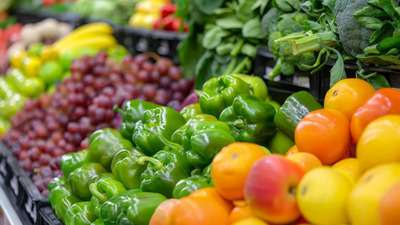
A peer-reviewed study by researchers at the Environmental Working Group (EWG), covered by ScienceDaily on March 3, 2026, found that people who frequently eat fruits and vegetables with higher pesticide residues — such as strawberries, spinach, and bell peppers — show significantly elevated levels of those pesticide chemicals in their urine. The researchers developed a 'dietary pesticide exposure score' estimating individual exposure based on produce consumed, residue levels detected on those foods, and the relative toxicity of each chemical.
The study drew on USDA pesticide residue data from 2013–2018, combined with dietary survey responses and urine biomonitoring data from 1,837 participants in the CDC's National Health and Nutrition Examination Survey (NHANES) from 2015 to 2016. Prior research has associated pesticide exposure with cancer, reproductive problems, hormone disruption, and nervous system harm — particularly in children and pregnant individuals.
"The findings reinforce that what we eat directly affects the level of pesticides in our bodies," said lead author Dr. Alexis Temkin, vice president for science at EWG. The researchers were careful to emphasize that overall fruit and vegetable consumption remains essential for health, and that the findings are intended to guide future studies on long-term dietary pesticide exposure — not to discourage eating produce.
O Que Você Pode Fazer
View the HHS Medical School Nutrition Initiative
Read the official HHS announcement about the 53 medical schools committing to 40 hours of nutrition education.
Read the WSU Healthy Food Definition Study
Access the Washington State University research validating the FDA's updated 'healthy' food criteria published in Current Developments in Nutrition.
Check EWG's Shopper's Guide to Pesticides in Produce
Explore the Environmental Working Group's annual guide to produce with the highest and lowest pesticide residues to make more informed grocery choices.
Este conteúdo é apenas para fins informativos e não constitui aconselhamento médico. Consulte profissionais de saúde antes de fazer mudanças dietéticas ou de saúde.