Iran Names Mojtaba Khamenei as New Supreme Leader Amid Escalating Conflict
Iran's Assembly of Experts appoints the late ayatollah's son as the country's third supreme leader while G7 nations prepare emergency oil reserve discussions and President Trump threatens a legislative standstill over voting legislation.
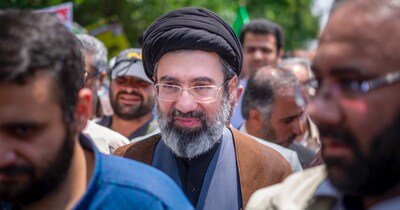
Iran Appoints Mojtaba Khamenei as Third Supreme Leader Following Father's Death
Iran's Assembly of Experts on March 8 formally elevated Mojtaba Khamenei to the role of supreme leader, making him the country's third holder of that office. The appointment came roughly ten days after his father, Ayatollah Ali Khamenei, was killed in strikes carried out by U.S. and Israeli forces on February 28. The 56-year-old has never held elected office but has spent years building influence within the Islamic Revolutionary Guard Corps from inside his father's inner circle.
The selection drew sharp reactions internationally. President Trump called the appointment "unacceptable" and stated that he had demanded veto power over the choice. Israeli officials reiterated their position that they would target whoever assumed the role. In contrast, Russian President Vladimir Putin offered what he described as "unwavering" support, while Chinese officials said they opposed any targeting of the new supreme leader. Swiss Defense Minister Martin Pfister stated that the U.S. and Israeli attacks on Iran have violated international law.
The conflict, now in its tenth day, has resulted in the deaths of seven U.S. military personnel. The Pentagon confirmed that the seventh soldier died from injuries sustained during an Iranian attack on U.S. troops stationed in Saudi Arabia on March 1. Hundreds of strikes have been carried out in the past 24 hours, including Israeli attacks on fuel depots that reportedly caused fires and toxic smoke over Tehran.
G7 Energy Ministers to Discuss Emergency Oil Reserve Release as Prices Near $120 a Barrel
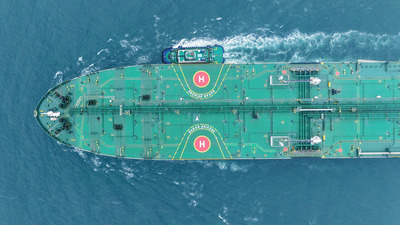
G7 energy ministers announced plans to convene an emergency meeting on Tuesday, March 11, to discuss a coordinated release of strategic petroleum reserves as crude oil prices surged past $110 per barrel and approached $120. The price spike, the highest since Russia's 2022 invasion of Ukraine, has been driven by escalating disruptions to global energy supply stemming from the U.S.-Israel-Iran conflict.
Iran has begun targeting ships passing through the Strait of Hormuz, a waterway through which roughly 20 percent of the world's oil supply transits. Additionally, U.S. and Israeli airstrikes hit Iranian oil facilities over the weekend for the first time since the conflict began in early March. French President Emmanuel Macron said the G7 could tap emergency stockpiles in response to soaring prices, and three G7 nations, including the United States, have reportedly expressed support for the coordinated release.
Analysts have cautioned that strategic reserve releases have historically moderated price spikes rather than reversed them, particularly when underlying supply disruptions are structural. The 2022 release of 180 million barrels from the U.S. Strategic Petroleum Reserve did not prevent oil from remaining elevated for months. Markets responded to news of the planned G7 discussion with a partial pullback in prices, though crude remained above $110.
Trump Declares He Will Not Sign Any Bills Until Senate Passes SAVE America Act
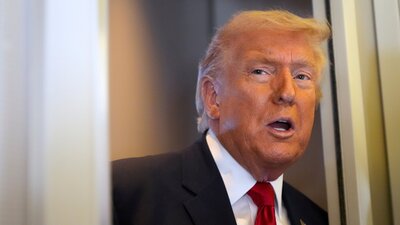
President Trump announced on Sunday that he would refuse to sign any legislation into law until the Senate passes the SAVE America Act, a bill that would require proof of U.S. citizenship to register to vote in federal elections. Trump added that a "watered down" version of the legislation would not be acceptable. The bill has already passed the House of Representatives, where it has cleared the chamber three separate times over the years with strong Republican support.
The legislation faces significant obstacles in the Senate, where Republicans hold a 53-47 majority but fall short of the 60-vote threshold needed to overcome a filibuster. Democrats have uniformly opposed the measure. Senate Minority Leader Chuck Schumer responded to Trump's announcement by stating that the SAVE Act would "disenfranchise tens of millions of people" and warned that Trump's stance would produce "total gridlock in the Senate." Trump has been pressing Senate Majority Leader John Thune to employ a talking filibuster to bypass the 60-vote requirement, but Thune has maintained his commitment to preserving that procedural threshold.
The standoff carries immediate practical consequences. The federal government faces a partial shutdown related to Department of Homeland Security funding, and Trump's pledge means he could refuse to sign a deal even if Congress reaches one. However, under the Constitution, bills automatically become law if the president does not sign or veto them within 10 days of passage while Congress is in session.
Former Rapper Balendra Shah Set to Become Nepal's Next Prime Minister After Landslide Election Win
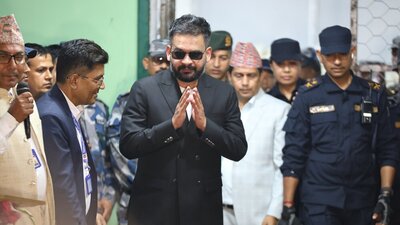
Balendra Shah, the 35-year-old former rapper and mayor of Kathmandu, is poised to become Nepal's next prime minister after his Rastriya Swatantra Party secured a landslide victory in the country's general election held on March 5. The centrist party won 125 directly elected seats, far exceeding the threshold needed to form a government. Shah himself defeated four-time former Prime Minister KP Sharma Oli in a southeastern district, receiving nearly four times as many votes as the veteran politician and setting a record for the highest individual vote total in Nepalese parliamentary history at 68,348.
The election was the first since a Gen Z-led protest movement toppled the previous government last year. Young voters, frustrated by decades of corruption, high unemployment, and a revolving door of governing coalitions, drove much of the support for Shah's party. Shah, a structural engineer by training who rose to fame as a rapper before entering politics, won the Kathmandu mayoral race in 2022 on an anti-corruption platform and resigned the position ahead of the parliamentary elections.
The result represents a historic shift in Nepalese politics, breaking the decades-long dominance of established parties led by aging politicians. Shah's RSP ran on a platform emphasizing transparency, youth employment, and institutional reform. International observers noted the election was conducted peacefully, with the Election Commission of Nepal publishing final results confirming the party's commanding position.
O Que Você Pode Fazer
Track the Iran Conflict Timeline
The UK Parliament Research Briefing provides a detailed, regularly updated timeline of the US-Israel strikes on Iran with sourced facts.
Monitor Oil Prices and Energy Markets
Follow real-time crude oil pricing and G7 energy policy developments as the situation evolves.
Read the SAVE America Act Bill Text
Access the full text of the SAVE America Act on Congress.gov to understand what the legislation proposes.
Follow Nepal's Government Formation
Track developments as Balendra Shah forms Nepal's new government following the historic election results.
Este conteúdo visa reportagem factual. SuperPage não endossa nenhum candidato, partido ou posição política.