US Bombs Iran's Kharg Island Oil Hub on Day 14; Six Airmen Confirmed Dead
The US struck Iran's primary oil export facility as the two-week conflict escalated across the Middle East, while Vice President Vance conspicuously distanced himself from the war and oil prices held above $100 a barrel.
US Strikes Iran's Main Oil Export Hub as Middle East Conflict Enters Third Week
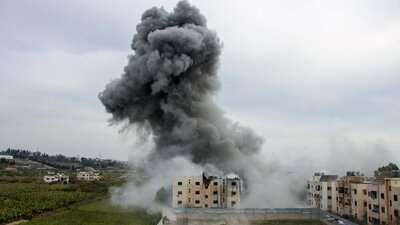
On Day 14 of the conflict that began February 28, the US military launched its highest volume of airstrikes yet against Iran, targeting military installations on Kharg Island, a narrow stretch of land off the Iranian coast that handles roughly 90 percent of the country's crude oil exports. President Trump said the US had "totally obliterated every military target" on the island. Defense Secretary Pete Hegseth stated that the number of sorties and bomber pulses on March 13 represented the highest volume to date, describing the pace as "ramping up and only up."
The strikes came as all six crew members of a KC-135 refueling aircraft were confirmed dead after the plane crashed in western Iraq on March 12 during Operation Epic Fury, bringing the total US service member deaths to 13 since the war began. US Central Command stated the crash was not caused by hostile or friendly fire, though the Islamic Resistance in Iraq claimed responsibility. Meanwhile, Iran's Health Ministry reported that at least 1,444 people have been killed and over 18,500 injured in US-Israeli strikes since the start of the conflict.
Israel's military launched a separate wave of airstrikes across Tehran and western Iran, hitting over 200 targets including government buildings and weapons storage sites. Iran's new supreme leader, Mojtaba Khamenei, issued his first public statement warning that attacks on Israeli and US military assets would continue unless US bases in the region are closed. Iran also fired a new barrage of missiles toward Israel, and Hezbollah chief Naim Qassem declared the group was fighting an "existential" battle.
Vice President Vance's Distance from Iran War Becomes Increasingly Conspicuous
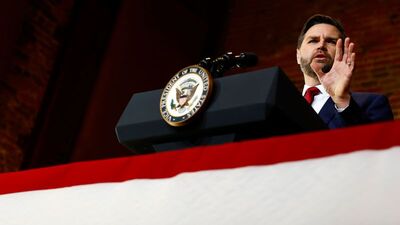
Two weeks into the conflict with Iran, Vice President JD Vance has notably refrained from publicly endorsing the military campaign, a posture that stands in sharp contrast to his enthusiastic support for earlier Trump administration actions. According to CNN, Vance has yet to offer any public vote of confidence in the war effort, and when pressed by reporters about his personal views, he gave an extended answer without stating a clear position, describing his advice to the president as "classified."
The vice president's reluctance is complicated by conflicting accounts of his role. A New York Times report quoted administration insiders who said Vance had urged Trump to "go big and go fast" if strikes on Iran were to proceed. However, two Trump officials told Politico that Vance "made his opposition known in the leadup" to the war and is now "worried about success." Trump himself acknowledged the tension, telling reporters that Vance was "philosophically a little bit different" and "maybe less enthusiastic about going."
The dynamic has drawn attention to Vance's past statements criticizing US military interventions abroad. At a 2024 Michigan rally, Vance accused political leaders of sending young Americans to fight in "stupid wars." Multiple outlets have noted that those remarks are now circulating widely on social media as the conflict continues.
FBI Investigates Michigan Synagogue Attack as Suspect's Family Ties to Conflict Emerge
The FBI said it is investigating the March 12 attack on Temple Israel, a Reform synagogue in West Bloomfield Township, Michigan, as a "targeted act of violence against the Jewish community." The attacker, 41-year-old Ayman Mohamed Ghazali, a Lebanese-born US citizen, rammed a vehicle into the building and opened fire before being killed. No staff, teachers, or any of the 140 children at the synagogue's early childhood center were injured.
Investigators revealed that Ghazali had lost four family members — two brothers, a nephew, and a niece — in an Israeli Defense Forces drone strike on the town of Machghara in southern Lebanon on March 5, carried out as part of the broader regional conflict. The suspect had no prior criminal record, no registered firearms, and had never been the subject of an FBI investigation. He had entered the US in 2011 on a spousal visa and obtained citizenship in 2016.
NBC News reported that Ghazali purchased approximately $2,000 worth of fireworks prior to the attack, suggesting premeditation. The incident has heightened concerns about domestic security amid the ongoing Middle East conflict, with officials from both parties calling for increased protection of religious institutions.

Oil Prices Hold Above $100 a Barrel as Strait of Hormuz Closure Creates Historic Supply Crisis
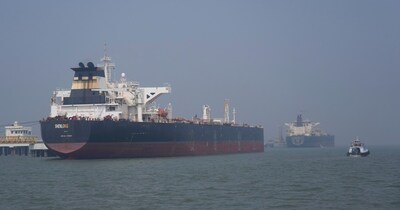
Brent crude remained above $100 per barrel on March 13, up 13 percent since the start of the Iran war, as Iran's effective blockade of the Strait of Hormuz continued to strangle global oil supplies. The International Energy Agency described the situation as "the largest supply disruption in the history of the global oil market," noting that oil flowing through the critical waterway had been reduced to "a trickle." The strait normally carries approximately one-fifth of the world's oil supply.
The price spike intensified after Iran's new supreme leader, Mojtaba Khamenei, pledged to maintain the closure of the strait. Iran's Islamic Revolutionary Guard Corps previously warned that "not a litre of oil" would pass through the waterway and threatened to attack any US, Israeli, or allied vessel attempting transit. The IEA released a record 400 million barrels from strategic reserves in an effort to stabilize markets, but prices have continued to fluctuate sharply.
The Trump administration has faced pressure to address rising energy costs domestically. According to CNBC, the president's plans to lower oil prices through increased domestic production and diplomatic pressure on allied producers have so far fallen short. Fuel prices across the US and globally remain elevated, with the International Road Transport Union warning of continued volatility in the transportation sector as long as the strait remains disrupted.
O Que Você Pode Fazer
Follow Official CENTCOM Updates
US Central Command publishes press releases on military operations, including casualty reports and operational updates.
Track Congressional Votes on the Conflict
Monitor how your representatives are voting on war-related legislation and appropriations through GovTrack.
Monitor Global Oil Market Impact
The International Energy Agency provides monthly reports on energy supply disruptions and strategic reserve releases.
Este conteúdo visa reportagem factual. SuperPage não endossa nenhum candidato, partido ou posição política.