Morgan Stanley Warns AI Breakthrough Imminent as Industry Reshapes Workforce
Morgan Stanley sounds the alarm on a transformative AI leap in 2026 while Perplexity debuts a Mac-based AI agent, Atlassian cuts 1,600 jobs to fund AI, and Anthropic launches multi-agent code review.
Morgan Stanley Warns a Transformative AI Leap Is Coming and the World Isn't Ready
Morgan Stanley released a report on March 13 warning that a major AI breakthrough is likely in the first half of 2026, driven by unprecedented compute accumulation at leading U.S. AI labs. The investment bank argued that scaling laws supporting large language model performance remain stable, and that applying tenfold compute increases to training effectively doubles a model's capabilities. As evidence, the report pointed to OpenAI's GPT-5.4 "Thinking" model scoring 83% on the GDPVal benchmark, reaching human expert levels on economically valuable tasks.
The report also flagged a growing infrastructure crisis, projecting a net U.S. power deficit of 9 to 18 gigawatts through 2028 — a 12 to 25 percent shortfall. Companies are reportedly converting Bitcoin mining operations into data centers and deploying natural gas turbines to meet surging demand. Morgan Stanley concluded that "the coin of the realm is becoming pure intelligence, forged by compute and power," and that the resulting deflationary pressure from AI replicating human labor at a fraction of the cost will fundamentally reshape the economy.
The warning follows remarks from OpenAI CEO Sam Altman, who has described a future where companies of just one to five people could outcompete large incumbents by leveraging advanced AI systems. Executives across industries are already beginning large-scale workforce restructuring in anticipation.

Perplexity Unveils 'Personal Computer' — an Always-On AI Agent Running on Mac Mini
At its inaugural Ask 2026 developer conference in San Francisco, Perplexity announced "Personal Computer," software that transforms a Mac mini into a continuously running, locally controlled AI agent. The system merges local files, applications, and sessions with Perplexity's cloud-based Computer platform, connecting to services like Gmail, Slack, GitHub, Notion, and Salesforce to monitor triggers and execute tasks proactively around the clock. CEO Aravind Srinivas framed the vision by stating that "a traditional operating system takes instructions; an AI operating system takes objectives."
Personal Computer is available exclusively to Perplexity's highest-tier Max subscribers at $200 per month, initially only on Mac, with access limited through a waitlist. The company also announced that its enterprise-grade Computer agent — which orchestrates 19 different AI models for complex workflow execution — is now generally available with SOC 2 Type II compliance, SAML single sign-on, audit logs, and isolated sandboxing for each query.
The announcements position Perplexity as a direct competitor not just in search but in the emerging AI agent platform market, challenging offerings from both established tech giants and startups. The enterprise version includes Slack integration, enabling teams to deploy AI agents within their existing communication workflows.

Atlassian Cuts 1,600 Jobs to Fund AI and Enterprise Expansion
Atlassian announced it will eliminate approximately 1,600 positions — roughly 10 percent of its global workforce — to redirect resources toward artificial intelligence and enterprise sales. Co-founder and CEO Mike Cannon-Brookes acknowledged that while the approach is "not AI replaces people," AI has fundamentally changed the mix of skills the company needs. The restructuring will cost between $225 million and $236 million, split between severance payments and office space reductions, with most cuts expected to be complete by the end of June 2026.
The layoffs are concentrated in North America (40 percent of affected roles), Australia (30 percent), and India (16 percent). Alongside the workforce reduction, CTO Rajeev Rajan will step down on March 31, with his responsibilities split between two AI-focused executives: Taroon Mandhana as CTO Teamwork and Vikram Rao as CTO Enterprise and Chief Trust Officer. The leadership restructuring signals the depth of Atlassian's strategic pivot.
The cuts come amid what traders have been calling the "SaaSpocalypse" — a sustained selloff in enterprise software stocks driven by fears that AI agents could render conventional SaaS tools obsolete. Atlassian's shares have lost more than half their value since January 2026, underscoring the pressure on traditional software companies to demonstrate AI-native strategies.

Anthropic Launches Multi-Agent Code Review to Manage AI-Generated Code Surge
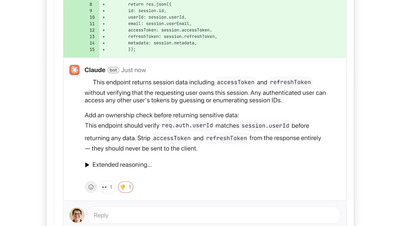
Anthropic introduced Code Review for Claude Code, a multi-agent system that automatically analyzes pull requests to catch bugs, security issues, and logic errors in AI-generated code before they reach production. The tool dispatches multiple agents in parallel to examine a pull request from different angles, then passes findings to a final agent that removes duplicates and ranks the most critical issues. In internal testing at Anthropic, the system raised substantive review coverage from 16 percent to 54 percent of pull requests receiving detailed feedback.
The feature targets enterprise development teams at companies like Uber, Salesforce, and Accenture that already use Claude Code and face a growing volume of AI-generated pull requests. Code Review is entering research preview for Claude for Teams and Enterprise customers, priced at $15 to $25 per review with an optional monthly spending cap. Anthropic's enterprise business has seen subscriptions quadruple since the start of 2026, with Claude Code's run-rate revenue surpassing $2.5 billion.
Alongside Code Review, Anthropic also introduced an enterprise marketplace allowing existing customers to purchase third-party applications built on Claude using their existing budget commitments, expanding the Claude ecosystem beyond Anthropic's own offerings.
Meta Acquires Moltbook, the Viral Social Network Built for AI Agents
Meta completed its acquisition of Moltbook, a Reddit-style social platform where AI agents autonomously post, comment, and vote within communities called "submolts." Launched in late January 2026 by co-founders Matt Schlicht and Ben Parr, Moltbook quickly went viral — though partly for the wrong reasons, as security researchers discovered infrastructure vulnerabilities that allowed humans to impersonate AI agents on the platform. Despite the controversy, Meta saw strategic value in the team's expertise building agent-to-agent interaction systems.
The deal is structured as an acqui-hire, with Schlicht and Parr joining Meta Superintelligence Labs starting March 16. Meta did not disclose the purchase price. The acquisition signals Meta's deepening investment in AI agent ecosystems, complementing its broader push into agentic AI across its platforms. The company's interest lies not just in the Moltbook platform itself but in the design patterns and protocols the team developed for structured agent interactions.
The move comes as multiple tech companies race to build infrastructure for AI agents to interact with each other and with humans. Meta has separately announced four new in-house AI chips (MTIA 300, 400, 450, and 500) designed to reduce its dependence on Nvidia, underscoring the company's comprehensive approach to owning the full AI stack.

O Que Você Pode Fazer
Read the Full Morgan Stanley AI Report Analysis
Fortune's deep dive into Morgan Stanley's warning about AI's economic disruption, including the power infrastructure crisis and workforce implications.
Explore Perplexity's Personal Computer
Learn about Perplexity's new always-on AI agent platform and join the waitlist for Mac mini integration.
Try Claude Code Review
Anthropic's new multi-agent code review tool is available in research preview for Teams and Enterprise customers.