OpenAI Launches Compact GPT-5.4 Models as Microsoft Retreats from Copilot Push
OpenAI released its smallest and cheapest GPT-5.4 models for developers, while Microsoft quietly canceled several planned Copilot integrations in Windows 11 following user backlash.
OpenAI Releases GPT-5.4 Mini and Nano — Its Most Capable Small Models Yet
OpenAI expanded its GPT-5.4 lineup on March 17 with the launch of two compact models aimed at developers who need speed and cost efficiency at scale. GPT-5.4 mini delivers more than twice the performance speed of its predecessor, GPT-5 mini, with meaningful improvements across coding, reasoning, multimodal understanding, and tool use. Priced at $0.75 per million input tokens and $4.50 per million output tokens, it also approaches the capabilities of the full GPT-5.4 on key benchmarks including SWE-Bench Pro and OSWorld-Verified.
GPT-5.4 nano, the smallest and most affordable model in the lineup, is designed for tasks where latency and cost are paramount — including data classification, extraction, ranking, and simpler coding subtasks in multi-agent workflows. It is priced at just $0.20 per million input tokens and $1.25 per million output tokens, making it among the cheapest high-quality models available. Both models are accessible via the OpenAI API, with mini also available through Codex.
The release comes just twelve days after GPT-5.4 itself launched on March 5 with native computer-use capabilities and a 1-million-token context window. According to OpenAI, ChatGPT's free tier will also gain access to the mini model, extending advanced reasoning capabilities to users who do not pay for a subscription.

Microsoft Quietly Cancels Copilot Integrations in Windows 11 After User Backlash
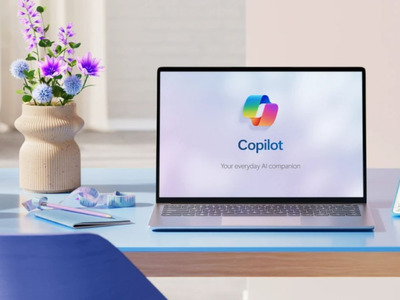
Microsoft has shelved plans to deepen Copilot integration across Windows 11, scrapping features that would have embedded the AI assistant into notifications, the Settings app, and File Explorer. According to reporting by Windows Central and gHacks, the company had spent considerable time developing these features as part of its Copilot+ PC push in 2024, but has now quietly removed them from its roadmap. The most notable cancellation is Copilot suggestions in notifications — a feature that would have surfaced AI-powered one-click actions within app pop-ups — which appears unlikely to ship at all.
The reversal follows significant backlash over Windows Recall, a feature that continuously screenshots user activity to power AI search. Security researchers widely flagged Recall as a privacy risk, and the controversy damaged user sentiment toward Microsoft's broader AI strategy. Underperformance of Copilot+ PC hardware in the market compounded the pressure, leading the company to conclude that blanket AI integration was doing more harm than good.
Going forward, Microsoft says it will take a more targeted approach: AI features in Windows will be opt-in or easily disabled, and new integrations will only roll out where they add clear, tangible value. The shift reflects a broader industry reckoning with user fatigue around AI-first product design.
Canada Pushes for AI Accountability Over Use of Journalism Without Compensation
Canadian Culture Minister Marc Miller called for a "serious conversation" about how AI systems consume and redistribute journalism, a day after a new report found that AI chatbots routinely rely on Canadian news content without citing sources or compensating publishers. The report, released March 16, concluded that AI companies are effectively absorbing the substance of journalism and delivering it directly to users as their own output — a practice Miller described as undermining the purpose of independent news production.
Miller was asked whether Canada plans to extend its Online News Act — which currently requires Meta and Google to pay media outlets for displaying their content — to cover AI companies as well. He stopped short of committing to legislative changes, saying the priority is ensuring companies act responsibly. The Online News Act has already reshaped the news-media relationship with Big Tech: Meta removed Canadian news from its platforms rather than comply, while Google has begun making payments under a negotiated arrangement.
The AI dimension is seen as a distinct problem from social media. Unlike platforms that surface links to journalism, AI systems can summarize or synthesize reporting without pointing users back to original sources, potentially cutting off traffic and advertising revenue for news organizations. The minister's remarks signal that Ottawa is at minimum watching the issue closely, even if formal regulation targeting AI-news interactions remains unresolved.

O Que Você Pode Fazer
Try GPT-5.4 Mini in ChatGPT
The new mini model is now available to ChatGPT free-tier users, offering significantly improved coding and reasoning at no cost.
Explore OpenAI API Pricing for Mini and Nano
Developers building high-volume or latency-sensitive applications can review the new pricing tiers for GPT-5.4 mini and nano on OpenAI's platform page.
Read the Full AI and Canadian Journalism Report
The report that prompted Minister Miller's remarks examines how AI systems use Canadian journalism without citation or compensation — essential reading for anyone tracking AI policy.